Why Air Cargo Volume Shapes Ground Operations
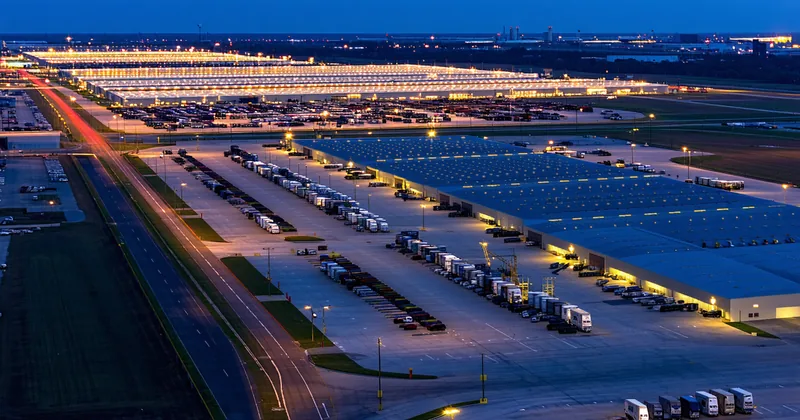
Memphis International Airport has handled more air cargo by tonnage than any other North American airport for most of the past three decades. That distinction isn't primarily about the airport's physical scale — it's about the sortation operations that happen inside the facilities surrounding the runways every night. The density of automated sortation infrastructure in the Greater Memphis area, built to handle the extraordinary throughput demands of air express parcel networks, has created something unusual: a regional operations ecosystem where sortation expertise — engineering knowledge, workforce skills, and vendor relationships — is concentrated at a level that exists in very few other locations on the continent.
For FC operators in the Mid-South region, and for the logistics software companies that serve them, this concentration matters more than it might initially appear. Understanding why Memphis became this kind of sortation hub — and what it means operationally for the facilities that work in and around its logistics ecosystem — is useful context for anyone managing high-throughput fulfillment operations in the region.
The Infrastructure Density Effect
When an industry concentrates geographically, the supporting infrastructure concentrates with it. Memphis is home to a dense network of facilities designed specifically for high-throughput sortation: large-footprint buildings with sort loop configurations optimized for parcel flow, floor loads specified for conveyor system weight, ceiling clearances sized for elevated sort loops, and power infrastructure sized for the electrical demands of multi-zone cross-belt and sliding-shoe sorters.
For FC operators establishing or expanding sortation capacity in the region, this infrastructure density has practical effects. Industrial real estate in the Memphis logistics corridor — particularly in the areas surrounding the airport and along the major freight routes toward Shelby County's industrial parks — includes a meaningful proportion of buildings that were originally built or retrofitted for automated sortation. These buildings come with infrastructure that would be expensive to add to a generic industrial shell: heavy floor loads, high bays, existing conveyor cutouts, and electrical capacity that can support 800–1,200 amp three-phase service per sort zone.
The implication isn't that every available building in Memphis is pre-configured for sortation — obviously it isn't. The point is that the proportion of sortation-ready or readily convertible industrial space is higher in this market than in most comparable-size metro areas. For a growing 3PL operator evaluating Mid-South expansion, that infrastructure availability reduces fit-out cost and timeline relative to markets where sortation-compatible real estate is scarcer.
Workforce Expertise in High-Throughput Operations
Sortation operations are more skill-intensive than they appear from outside. Induction technicians, sort floor supervisors, WES maintenance technicians, conveyor mechanical maintenance staff, and systems integration engineers who work on OPC UA / PLC interfaces are all roles where experience with high-throughput automated sortation is genuinely valuable and not easily substituted with general logistics workforce.
Memphis has a workforce with this experience in unusual density. Decades of large-scale sortation operations have trained a regional workforce in the specific operational disciplines of automated parcel sorting: reading WES telemetry, managing induction lane balance under surge conditions, executing chute pull protocols for high-velocity carrier zones, and maintaining cross-belt and sliding-shoe mechanical systems at the service intervals that multi-million-cycle equipment requires.
For an FC operator opening or expanding sort operations in Memphis, that workforce depth matters in two ways. First, recruiting for sort floor supervisor and WES technician roles is more tractable in Memphis than in markets without the same operations density — the candidate pool has been shaped by the regional industry. Second, the informal knowledge transfer that happens in regional labor markets — where operations professionals move between employers, carry niche expertise, and train colleagues — means that newer or smaller FC operations in the region benefit from an ecosystem-level knowledge base that isn't accessible in markets without the same concentration.
Sortation Technology Adoption in a High-Velocity Market
Proximity to high-throughput sortation operations has made Memphis a faster-than-average early adoption market for sortation technology. When a new WES analytics module or sortation control upgrade becomes available, the mid-size FC operators in the Memphis region have something that operators in lower-density logistics markets don't: peers in the same labor and professional networks who are evaluating or deploying the same technology, providing a practical reference community for technology assessment.
This isn't a formal industry organization dynamic — it's an informal market dynamic that operates through workforce movement, regional vendor relationships, and the operations professional networks that develop in any industry-dense geographic cluster. A VP Operations at a mid-size parcel FC in Memphis is more likely to have a professional contact who has deployed a specific WES upgrade or tested a specific sortation analytics platform than her counterpart running a comparable FC in a market without the same logistics density. That reference network reduces the information asymmetry that makes technology adoption riskier for early movers.
For sortation software vendors, Memphis is a meaningful early-market environment precisely because of this dynamic. The concentration of operational sophistication — of buyers who genuinely understand sort floor KPIs, can evaluate PPH claims against their own operational experience, and can provide useful feedback on real sortation problems — makes it a better testing ground for sortation-specific software than markets with more generic logistics operations.
Why Proximity to Operations Matters for Software Development
There's an argument — which we find reasonably compelling — that sortation software developed close to high-throughput sortation operations is more operationally credible than software developed by teams who have never stood on a sort floor at 1 AM during peak week. This isn't about geographic determinism. It's about the practical difference between building a product against customer specifications and building a product alongside the people who operate the systems it's designed to support.
Sort floor operations have a specificity that's difficult to replicate from specification documents alone. The way chute fill rate alerts need to be presented on a floor supervisor's tablet — legible at 20 feet, actionable in 10 seconds, not requiring a login — is different from how that same data looks in a WES engineering console. The induction lane imbalance detection threshold that's useful versus the one that generates alert fatigue is calibrated against real induction rate variance distributions, not theoretical models. The carrier window countdown display that helps the night shift supervisor and the one that gets ignored are different in ways that are obvious to anyone who's been on that sort floor during a tight window.
Sortwyre is headquartered in Memphis intentionally. The sortation operations expertise in this region — across the workforce, the vendor community, and the operations professional networks — is the environment that shapes product decisions. That proximity doesn't guarantee a better product, but it does mean that the problems being solved are the problems that operators at real sort floors actually have, not problems as they look in a requirements document written 1,500 miles from the nearest cross-belt sorter.
The Broader Mid-South Fulfillment Ecosystem
Memphis's sortation infrastructure concentration extends beyond the airport corridor. The broader Mid-South region — including distribution corridors along I-40 west toward Arkansas, I-55 north toward Tennessee's border with Kentucky, and the industrial zones of Shelby County — has a significant installed base of mid-size fulfillment centers serving regional distribution needs. These facilities range from 200,000 to 800,000 square feet, operating cross-belt and sliding-shoe sorters in the 8,000–20,000 PPH range — exactly the operational profile that sortation analytics software designed for mid-size FCs addresses.
The growth trajectory of e-commerce fulfillment in the Mid-South region continues to drive demand for sortation-optimized real estate and operations capacity. The infrastructure investment in Memphis-area logistics has been sustained over long enough a period that the regional ecosystem has depth in multiple dimensions simultaneously: real estate, workforce, vendor support networks, and operations knowledge. That combination is difficult to replicate in markets that haven't had the same duration of investment — and it makes Memphis one of the more interesting places in North America to be building and deploying sortation operations technology right now.