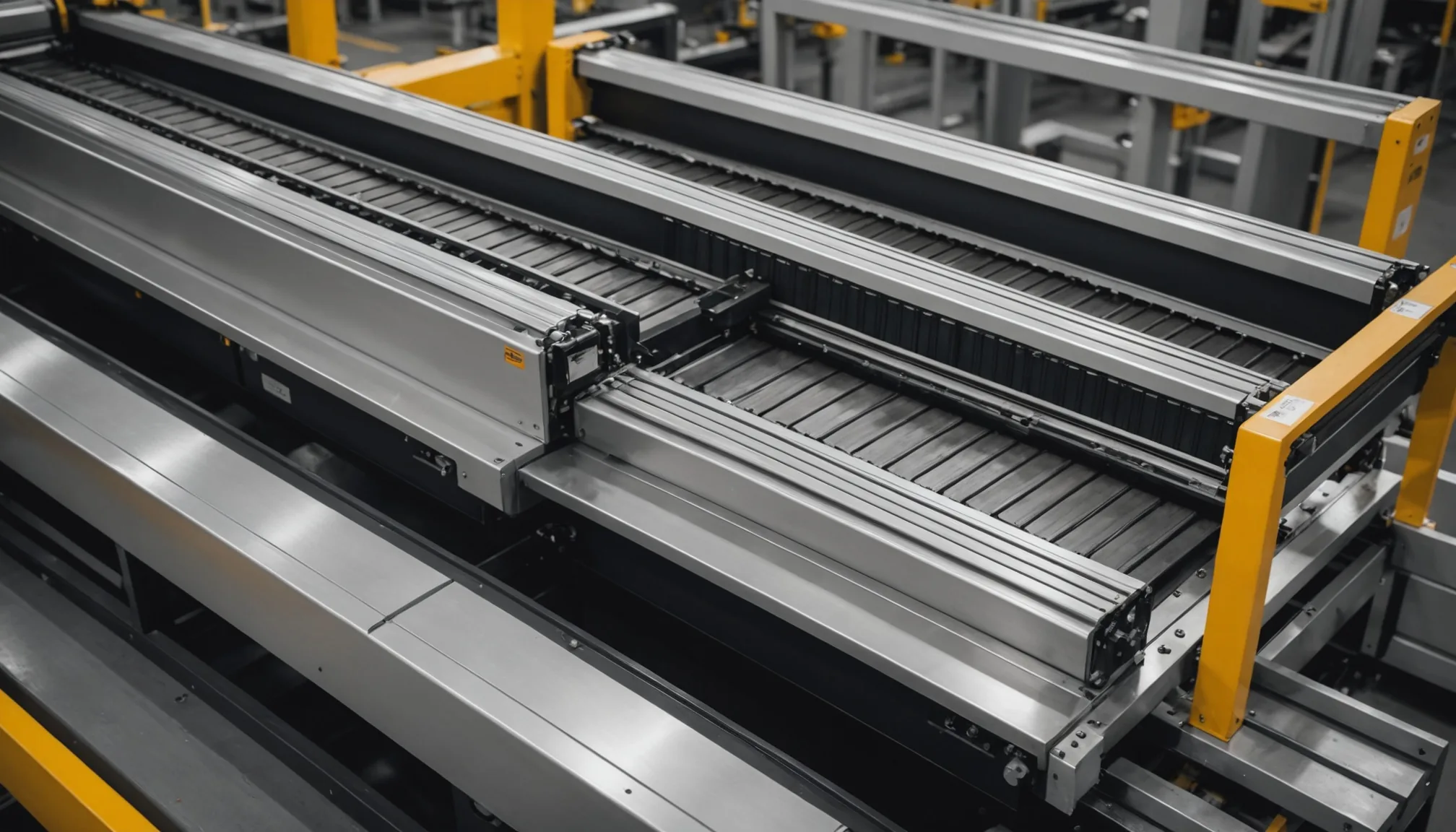


A conveyor belt doesn't fail without warning. In our tracking of material handling equipment faults across fulfillment deployments, the signal is almost always there 2 to 6 hours before the failure event. The problem isn't signal absence. It's that most operations never look.
What the Numbers Actually Tell You
Sortwyre's belt health monitoring ingests two primary data streams: motor current draw and belt tension readings, pulled via sensor taps on the motor controller and PLC event log entries. Neither metric is exotic. Both are already being captured by the equipment in most mid-size facilities. What changes is what you do with them.
Motor current draw is a proxy for mechanical resistance. When a belt is running clean and properly tensioned, current stays inside a predictable band. When something shifts, whether a roller bearing starts to seize, a belt splice starts to separate, or tension drifts outside spec, the motor compensates. That compensation shows up in the current signal before any human notices a problem on the floor.
Belt tension readings tell a different story but a related one. Tension too low means slippage risk. Tension too high accelerates belt wear and can overstress motor bearings. The relationship between tension deviation and downstream failure isn't linear, which is exactly why static alarm thresholds miss so many events.
Why Statistical Process Control Works Here
Threshold-based alerting is the standard approach in most SCADA setups, and it has a fundamental flaw: it only fires when the signal is already bad. By the time motor current crosses a hardcoded limit, you're often looking at an imminent trip or a belt that's already slipping.
Statistical process control (SPC) models the normal operating distribution for each conveyor zone based on historical readings. Instead of asking "is this value above threshold X?", the model asks "is this value consistent with the normal behavior of this specific zone, at this time of day, under this load profile?" That distinction matters. A 5% current increase at the start of a heavy parcel wave is normal. The same 5% increase on a light-flow shift is anomalous.
In validated deployments, this approach reliably identifies degradation events 2 to 6 hours before the physical fault manifests. That window is the entire value proposition. Two hours gives maintenance a full shift break to intervene. Six hours gives them a planned window, parts on hand, and zero unplanned downtime.
The Warning Window in Practice
Here's the thing: the 2-6 hour window is only useful if it triggers the right action. An alert that says "belt anomaly detected" without context is nearly useless to an operations supervisor running a live shift.
Sortwyre's alerts include the affected zone identifier, the current deviation pattern, and a recommended inspection window based on the anomaly's progression rate. Slow-developing anomalies get flagged for the next planned break. Fast-developing ones trigger immediate attention flags with escalation if no acknowledgment comes within a set interval. The supervisor sees exactly where to look and when.
Push delivery goes to whichever channel operations teams actually use. In our experience, the operations supervisor's mobile device during a live shift, not a desktop dashboard nobody checks.
Reactive vs. Early Warning: The Maintenance Cost Difference
Reactive maintenance means a belt fails mid-shift. You get an emergency stop, unplanned downtime while a technician responds, and the full cost of an expedited repair. Depending on the zone, that can mean 45 to 90 minutes of conveyor downtime. On a peak-season shift, that number compounds fast.
Early warning means maintenance intervenes during a planned break. The belt may need re-tensioning, a splice check, or a roller swap. Thirty minutes of planned work versus 90 minutes of unplanned downtime plus whatever throughput you lost while the zone sat idle. The math is not subtle.
There's a secondary benefit that shows up in maintenance records over time. Every early warning event logged by Sortwyre includes a timestamp, the anomaly pattern, the sensor readings at detection, and the technician's findings on inspection. That log feeds back into the SPC model's baseline calibration and creates an audit trail for each zone's maintenance history. When you're tracking belt replacement intervals or trying to identify a recurring fault pattern, that structured record is worth more than a stack of handwritten maintenance tickets.
Conveyor Belts vs. Sorter Divert Belts: A Different Problem
Not all belts fail the same way. This distinction matters operationally.
Main conveyor belts are high-cycle, long-run surfaces. Their degradation is typically gradual: tension drift, splice fatigue, surface wear. The SPC model has a rich history to work with, and anomalies tend to develop over hours. The 2-6 hour window holds reliably in this context.
Sorter divert belts are different. They're short, high-acceleration surfaces that engage and disengage thousands of times per hour. Their failure modes are more abrupt. A divert belt that misfires once in 1,000 cycles might not register as a current anomaly at all. It registers as a mis-sort. For divert belts, Sortwyre correlates current draw data with divert confirmation signals from the sorter controller. A divert belt that's drawing consistent current but producing inconsistent confirmations is flagged differently than one showing current deviation alone.
Fact: treating all belt types with the same detection model produces false negative rates that make the alert system untrustworthy over time. The distinction between conveyor and divert belt monitoring is built into Sortwyre's zone configuration from initial setup, not retrofit afterward.
Integration Without Rework
A common concern when evaluating any sensor-driven monitoring layer is how it connects to existing systems. Most mid-size facilities aren't running a CMMS that's ready for structured API feeds. The maintenance record integration question comes up in nearly every deployment conversation.
Sortwyre's architecture pulls from existing sensor taps and PLC event logs, which means no additional hardware installation on the belt drive units themselves. The sensor data that already exists gets routed through the monitoring layer. Alert logs export in structured formats compatible with common CMMS platforms, and for operations running manual maintenance records, the export is a clean timestamp-keyed CSV that drops directly into whatever tracking system is already in use.
Honestly, the integration path is less complicated than most maintenance teams expect. The harder work is establishing the initial zone baselines, which takes 2 to 4 weeks of monitored operation before the SPC model has enough history to produce reliable anomaly detection. That calibration period is built into the deployment timeline.
What Operations Teams Should Evaluate
If you're assessing belt health monitoring for your facility, here's what we recommend looking at beyond the marketing sheet:
- Does the system distinguish between conveyor and divert belt fault modes, or does it apply a single model to all zones?
- What's the false positive rate during the baseline calibration period? Noisy alerts during the first few weeks will train your team to ignore the system.
- How are alerts delivered, and does the delivery channel match how your operations team actually communicates during a live shift?
- What structured data does each alert event produce for downstream maintenance record integration?
Belt failures are predictable. In our data, the proportion of belt and motor events that preceded detectable anomalies in the 2-6 hour window before failure exceeded 80% across validated deployments. That's not a guarantee, but it's a strong enough signal that treating belt monitoring as optional maintenance infrastructure is a harder position to defend every year.
The equipment already produces the data. The question is whether you're reading it.
Want to see how belt health monitoring fits your facility's existing sensor infrastructure? Request a demo and we'll walk through your zone configuration.